I gave a job talk in the spring of 2020 about my work in Graham Johnson's lab. The four projects I walked through — a chemical cross-linker, a signaling-pathway visualization tool, lattice light sheet cell migration, and cellPACK — looked unrelated on the surface, but they are all projects where ingenuity is required to elucidate the unknown.
In every subdiscipline of biology — cellular, sub-cellular, macromolecular, molecular, atomic — the generation of data has been outpacing our ability to extract knowledge from it. Cell biologists, biochemists, chemical biologists, chemists. We have microscopy data we can't fully interpret, phosphoproteomics datasets bigger than we can mine, structural models of organelles we can't easily put in spatial context. The bottleneck is no longer measurement. It's integration.
Tools as translators
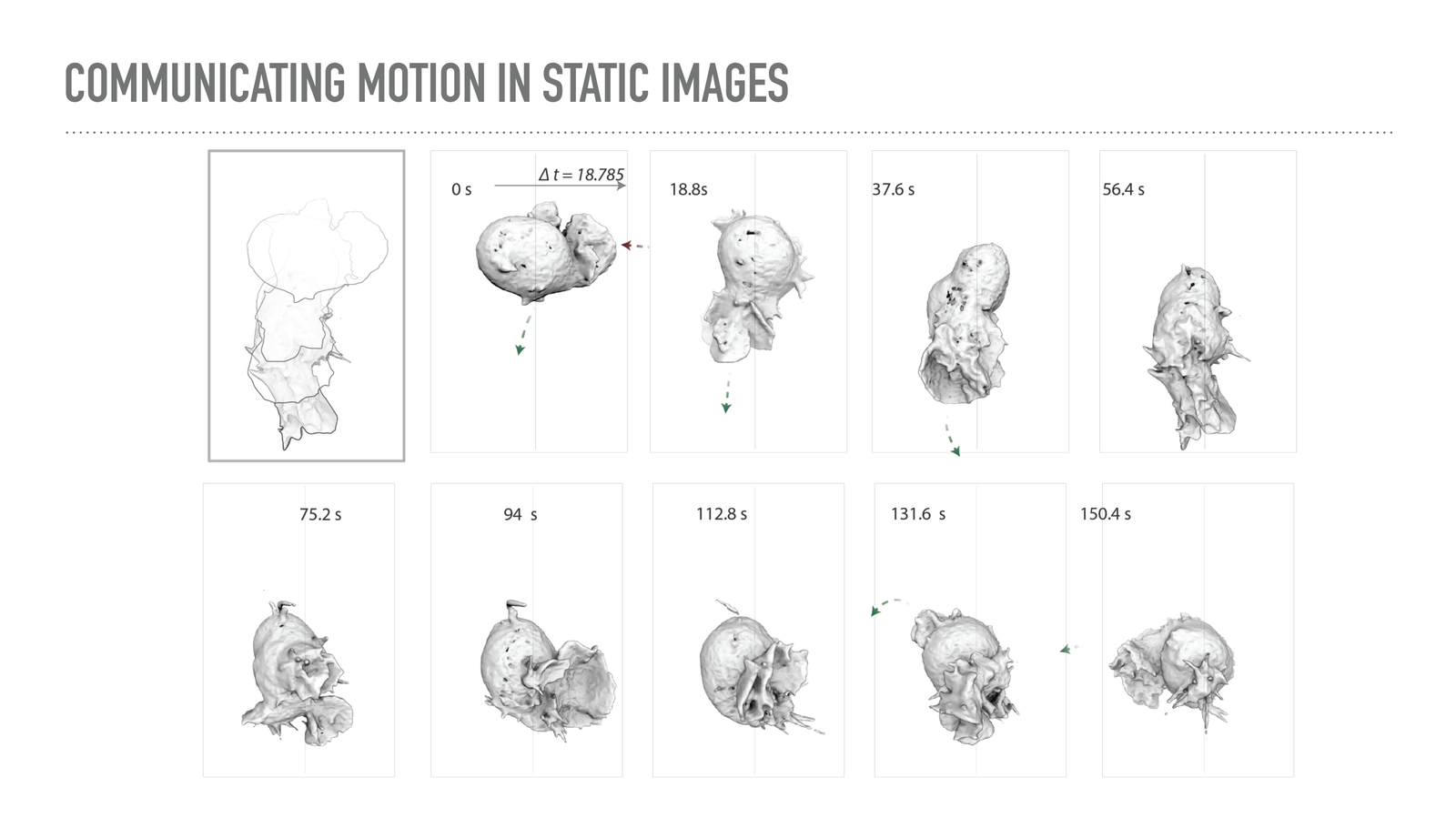
The cross-linker converts a phosphoprotein into a trap to discover the kinase that modified it. sigViz converts a signaling network into something biologists without a programming background can map and animate. The cell migration work takes 60 GB of 4D microscopy data and extracts meaningful insights into how cells crawl in 3D. cellPACK translates concentrations, structures, and ultrastructure into stochastic 3D models of cellular environments.
Each of these tools is a way of focusing some part of biology that wasn't legible before. The visualization scientist's bet is that this is a discipline of its own — that there's craft and method in building the bridge, and that the bridge is what most current science is missing.