Simularium
Simularium lets researchers view, explore, and share spatiotemporal biological simulations directly in the browser — no specialized software required.
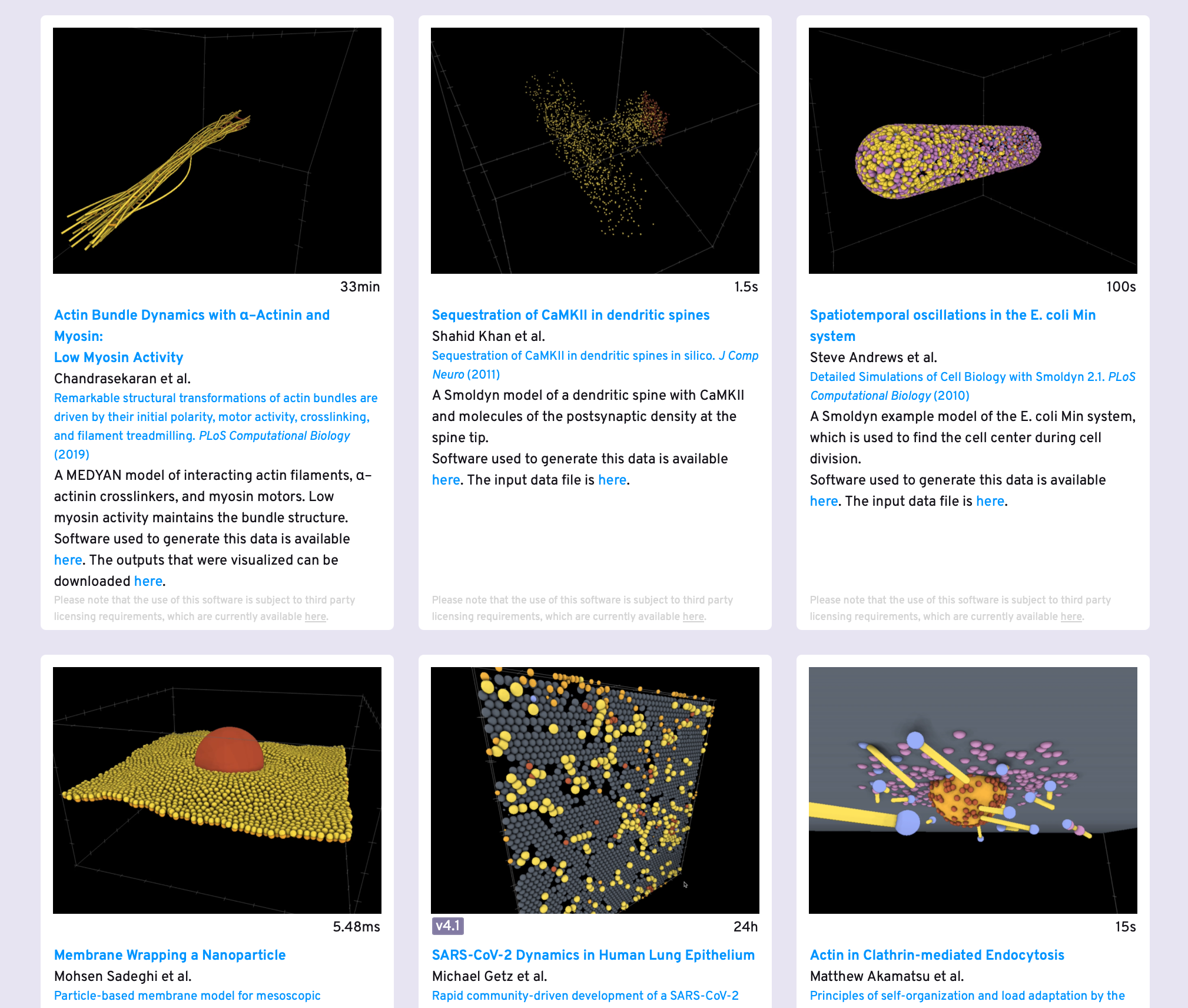
The computational modeling ecosystem in biology is enormous and fragmented. Molecular dynamics tools like GROMACS and NAMD run at the atomic scale; ReaDDy, Smoldyn, and MCell handle reaction-diffusion at the molecular scale; Cytosim and MEDYAN simulate cytoskeletal dynamics; PhysiCell, CompuCell3D, and Morpheus model cells as agents. Each speaks its own file format, its own visualization conventions, its own install dance. The result is that a simulation is often legible only to the person who ran it.
The best visualization tool is the one a collaborator can open without installing anything.
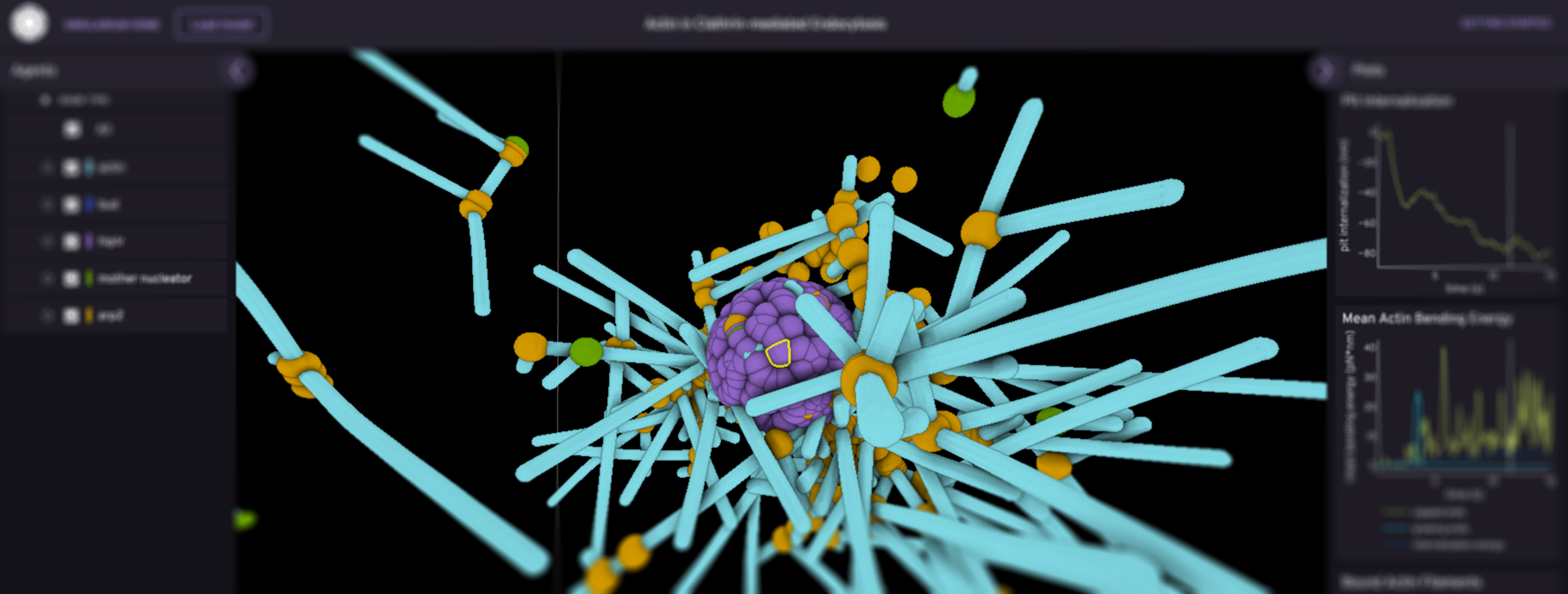
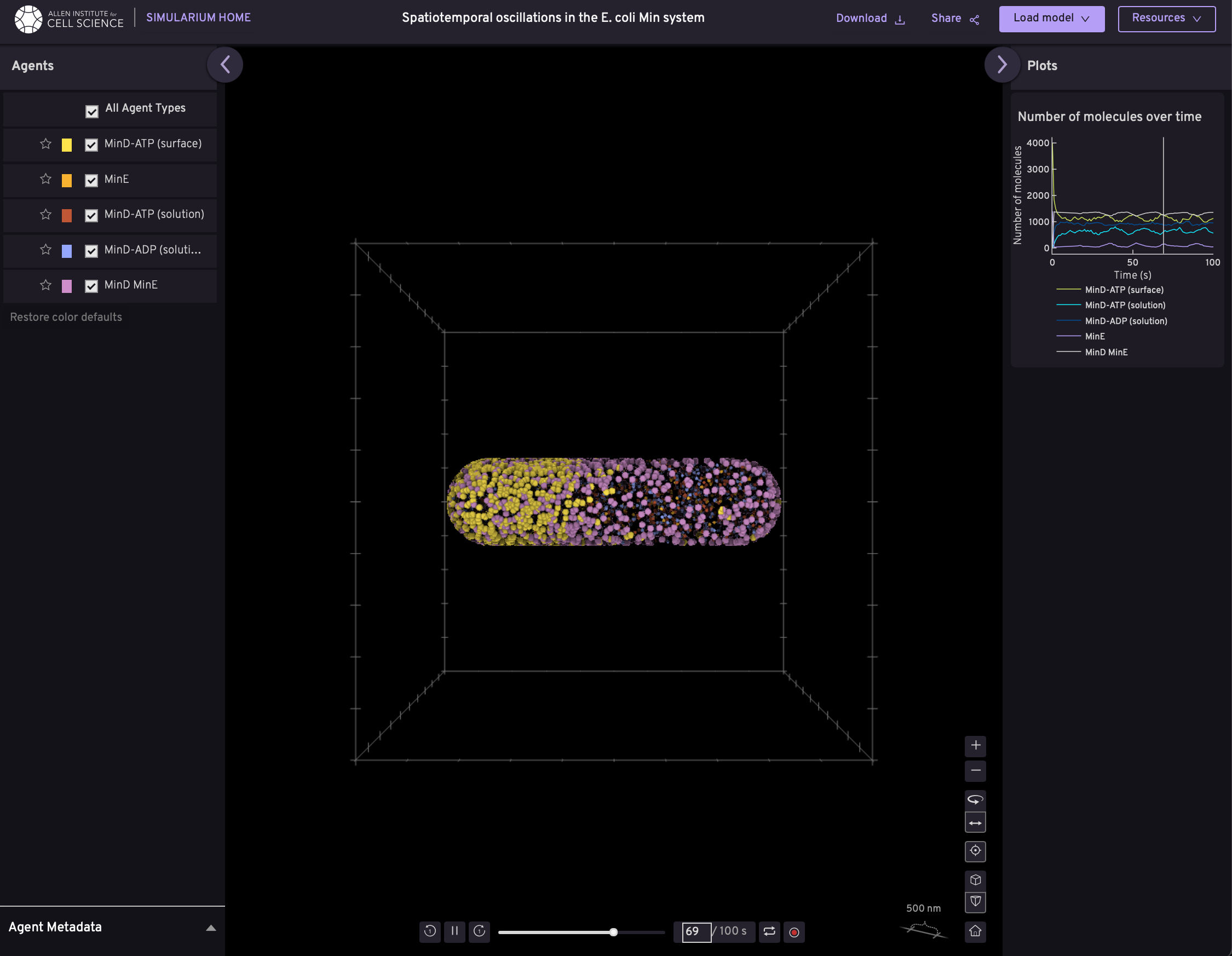
Simularium was built as a common viewer for that ecosystem. The project defines an open file format that simulations from diverse tools can export to, and a web viewer that renders them interactively — step through time, filter agents, change visual encoding, plot quantities alongside the 3D scene. I worked across the full visualization stack: designing the 3D rendering pipeline, building the UI, and collaborating on the file format spec. The viewer handles models ranging from molecular dynamics to whole-cell agent-based simulations, and the published trajectories range from clathrin-mediated endocytosis to biomolecular condensate buffering work in eLife.
Simularium was published in Nature Methods in 2022. Beyond researcher-to-researcher use, it became the substrate for the Binding Affinity education module — the first of a planned series of interactive simulation lessons. The long-term goal Graham Johnson and I have talked about for years sits behind all of this: a completely virtual cell that anyone with a browser can step into and explore.